The duration an at-fault accident remains on your record is a common concern, especially in the context of insuring an automobile in Ontario. To understand the time frame, it’s essential to distinguish between three types of records: CPIC checks, insurance company records, and driver’s abstracts.
CPIC Check (Canadian Police Investigative Checks)
CPIC checks are used by police officers to view your complete driving history.
However, this information is not accessible to insurance companies.
Insurance Company Records
Insurance companies maintain records of at-fault accidents for a period of seven to nine years in Ontario.
This history is crucial for insurance providers when assessing your risk profile and determining your premium.
Driver’s Abstract
A driver’s abstract includes information about accidents where you were deemed at fault.
After three years, the abstract clears itself, and after two years, the associated demerit points are no longer taken into account.
This self-cleaning process can have implications for your insurance rates.
How long does an at fault accident stay on your record in Ontario? A common question to be asked in the industry that I’m in, representing people on traffic tickets and summonses, and it’s an obvious concern to anyone who’s trying to insure an automobile here in Ontario.
The question is really answered by defining what record we’re talking about. So there’s really three types of records to concern ourselves with, and that would be a CPIC check, which is an acronym for the Canadian Police Investigative Checks. And for a police officer, when they’re looking at your record, your driving history, they’re going to see your entire driving history.
Those are not available to an insurance company. An insurance company is going to keep records of whatever accident, whatever at fault accident you were in, and they do that for somewhere between seven to nine years here in Ontario. So they’re going to be looking back at least that long when you’re involved in an accident where you’ve deemed to have been at fault.
The other, and third way of of talking about what a record is called an abstract, a driver’s abstract. So, if the abstract has a component of an accident, meaning it’s maybe careless driving or some rule of the road where there was an accident, where there was a determination from your insurance company that you were at fault. Well, if they were looking solely at an abstract, well, the abstract will clean itself or, or self cleans itself after three years and after two years, the points are no longer available. So it’s important to take a look at it in that regard.
So to answer the question in Ontario, it really depends on what is it you’re asking. So if you’re asking that question because you’re worried about how to approach your insurance company, or what will they know or how do I best advocate for a better insurance rate? Well, you need to consider it could be as long as seven to nine years, but in fairness, I would point out the fact that it is very old.
If it gets to be five years old it’s not something that should really affect your insurance, which means if you’re advocating for insurance, you can simply point that out and you are much more marketable. That is old now, and you can look for other companies to sort of engage and get a better quote for an insurance rate.
Author, Owner of OTD Ticket Defenders Legal Services and Licensed Paralegal
Licensed Paralegal & Founder of OTD Ticket Defenders
Ron Harper holds a BA in Psychology, a Certificate in Public Administration, and an Honours degree in Political Science, along with a Master’s in Judicial Administration. With over 40 years of experience in traffic law, including years of experience as a Prosecutor, Ron Harper leads one of Ontario's top traffic ticket defence firms.
Failing to remain at the scene of an accident carries significant consequences under the Highway Traffic Act, specifically in Ontario. Penalties Fine: A conviction for failing to remain at the scene of an accident results in a fine of $2,000. Imprisonment: There is a...
A license suspension in Ontario carries significant consequences, including staying on your driving record for three years. However, police officers have access to your full driving history, well beyond the three-year window. They can run a CPIC check, which gives...
If you hold a G2 license, you must follow specific rules different from those with a full G license. Demerit points are particularly important for G2 drivers. If you receive a ticket that has four or more demerit points, your license can be suspended for 30 days for a...
We have the skill and experience to help drivers just like you, all while protecting your best interests in the process. We provide free, no obligation, confidential consultations. To start a free consultation, text a copy of your ticket to 226-240-2480 or email a copy to help@otdlegal.ca. Once we receive a copy of your ticket, we will call you. As always, we can also be contacted toll-free by calling 1-844-647-6869.
Speeding tickets in Ontario is a common concern for drivers. While every resident is familiar with the authority carried by police officers, what about peace officers? Their role in traffic law enforcement is confusing to a lot of drivers and whether they have the...
Drivers must abide by posted speed limits to ensure the safety of both workers and motorists. Speeding in these areas leads to increased fines, sometimes doubled, to discourage risky behaviour. Fines can escalate significantly if one’s speed exceeds 30 km/h...
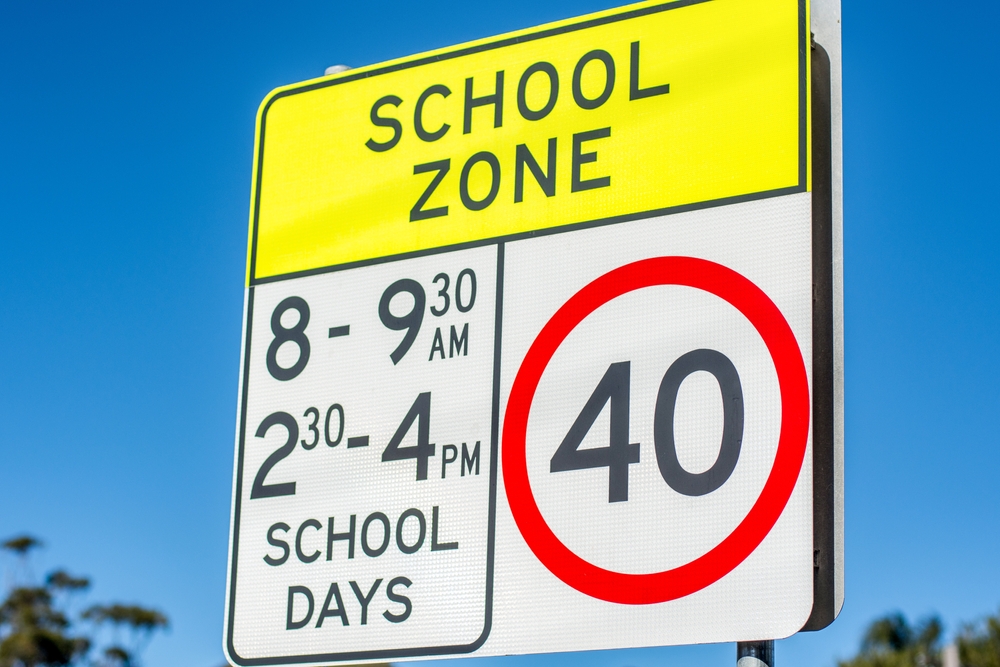
School zone speed limits in Ontario are regulated under Highway Traffic Act (HTA) s. 128 (5) and are designed to protect children and pedestrians near schools. By default, these reduced speed limits are in effect at all times unless a municipality...